Pages

Sunday, April 4, 2010

It's that time of year again...

It's time... time for peeps.  The Washington Post hosted the Fourth Annual Peeps Diorama Contest this year.  Many of the semi-finalists entries were based on children's books, including Where the Wild Peeps Are, an Alice in Wonderland tableau called the Mad Hatter's Peep party, and a scene from Bemelman's Madeline.


My favorite, however, was the Goodnight Moon inspired finalist, Goodnight Peep.  Check out the full gallery of semi-finalists on the Washington Post website.


And, of course, for a trip down memory lane, there's always that old internet classic, Peeps in the Library.

Saturday, April 3, 2010

How heartwarming!

It's always nice when people say nice things about you... or when you have the opportunity to say nice things about them!


Art teacher Katrina Alexy mentioned the children's art display we coordinated for the library recently in the Pilgrim School on-line newsletter.


It's mission time in 4th grade, which means that every 4th grader is assigned a California Mission to study. The 4th graders have been working hard on their observational skills creating unique pastels that focus on one aspect of their mission's architecture. Some students chose the bell towers to focus on, while others chose a fountain and courtyard all while employing their knowledge of pastel mixing, blending, and texturizing. These will go on display at the Silver Lake Library in April, but will first be displayed at Pilgrim. Madigan McGillicuddy, the Children's Librarian, tells me that “everyone in the community has been enjoying the art your students have shared in the Library... we get lots of compliments on their pieces all the time.” I am so proud of our students!

Friday, April 2, 2010

A guide from a librarian's librarian

Children's Literature Gems: Choosing and Using Them in Your Library Career
by Elizabeth Bird
ALA Editions
2009


I finally got my hands on a copy of librarian blogger Betsy Bird's first book.  Her primer on children's literature is geared for library school students or first year librarians.  Experienced librarians will probably find themselves nodding their heads in recognition of many of the reference scenarios that Bird describes.

I had expected
that the book would have Bird's trademark relaxed, sometimes silly, always rambling style, but she (or her editors) really reigned things in for this short monograph.  The normally verbose Bird weighs in at only 108 pages, along with a few booklists and an index.  The slim paperback edition is priced at a hefty $45.  Library school students overwhelmed with plenty of lengthy reading assignments and accustomed to paying high prices for textbooks probably won't mind. For the most part, Bird adopts a more sedate tone but she does let her own ad hoc patois slip through here and there, for example; when describing Tana Hoban's White on Black she explains, "Clear, contrasting tones are particularly good for babies vision and it doesn't get much contrastier than black and white." (Emphasis my own.)

Mainly, Bird
advocates maintaining a healthy balance between classic children's literature and brand new items.  She also covers such basics as the importance of the Newbery and Caldecott awards.   I was tickled to see that she highlighted a couple of my own favorite lesser-known titles to booktalk such as A Drowned Maiden's Hair by Laura Amy Schlitz, Phineas Gage: A Gruesome But True Story of Brain Science by John Fleischman, and The Chicken Chasing Queen of Lamar County by Janice H. Harrington, illustrated by Shelley Jackson.

With an
influx of new children's books being released every spring and fall, this book is sure to be dated in another few years.  But, for the moment, this is just the thing for anyone wanting a quick, readable guide to children's librarianship.


I borrowed this book from the library.

Thursday, April 1, 2010

It's the little things

I can't claim to be a genuine font nerd... I mean, there are many, many fonts that I would not be able to name on sight.  But I do find it slightly unsettling that the standard font on my twitter feed is sans serif, and doesn't appear to be customizable.  It doesn't match!  It doesn't maaaatch!   Aaaaagh!  Okay, maybe I am a teensy-tiny bit of a font nerd.

Tuesday, March 30, 2010

More from Meyer


Looks like Stephenie Meyer will be returning to the world of Twilight with her next release, just announced for June of 2010.  The Short Second Life of Bree Tanner is a novella based on one of the minor characters from Eclipse.  To me, at least, it feels like the equivalent of J.K. Rowling's The Tales of Beedle the Bard; an opportunity to briefly dip back into something familiar, one last chance for fans to enjoy, and like Beedle the Bard, part of the profits for Bree Tanner will be donated to charity.  At 192 pages, it's a lot shorter than the rest of the series, but it should still be lengthy enough to sink your teeth into.

Check out more info on the Little, Brown website.  Superfans, go ahead and bookmark www.breetanner.com now -- there are plans to make the whole novel available online for a limited time.

Wednesday, March 24, 2010

Moomintroll Cake


To the untrained eye, these look like hippos, but I noticed this cake featured on a recent Cake Wrecks Sunday Sweets post is based on Tove Jansson's Moomintroll series.  Be sure and check out the rest of the cartoon inspired cakes!  There's a lovely Beatrix Potter cake, as well as Strawberry Shortcake and Thomas the Tank Engine.

Sunday, March 21, 2010

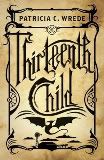
13th Child Review

Thirteenth Child
by Patricia C. Wrede
Scholastic
2009

Set in an alternate historical, magical America, young Eff is an unlucky thirteenth child. Her twin brother Lan, on the other hand, is the seventh son of a seventh son -- destined for greatness. She and most of her immediate family move away from Helvan Shores for a fresh start on the magical frontier after her extended family refuse to stop harassing her for her supposed bad luck.

I had heard a lot about the controversy surrounding Wrede's alternative history frontier fantasy before I read it, so I settled down to read this book with some trepidation, even though I dearly love Patricia Wrede. Because her new Frontier Magic series takes place in an alternate American history, one where the United States never had a Native American population, many readers and critics were troubled. It seems deeply insensitive to eradicate a group of people who have already been through so much. And yet, reading the book, didn't feel as overwhelmingly uncomfortable as I would have thought. I'm also a fan of Joss Whedon's Firefly, a science-fiction/Wild West type show, and I have to admit, the lack of Native Americans on that show never bothered me. It was unclear to me, reading Wrede's book, if slavery had ever existed in her alternate history. While Aphrikan people (and their magic) seem to be a rare minority, no further backstory is given.

I liked the idea of frontierspeople struggling to hold their own against magical creatures; mammoths, dragons, enchanted beetles. Magic, in this world, is commonplace and everyday. The Wild West twang to the character's speech added depth to the story.

Eff's continual low self-esteem became a bit wearing as the story went on. She is just as worried at age eighteen about inadvertently causing bad luck to befall her family and loved ones as she was at age five, when her maliciously bad-tempered extended family went so far as to outright suggest that her parents do away with her. Some of the terms like Mammoth River (for the Mississippi) or Columbia (for America) being thrown together with place names such as Philadelphia threw me a bit. I wish that this had been set in a completely new world altogether, kind of like Robin McKinley's The Blue Sword.

I was fascinated with the Rationalists, Puritan-like settlers who eschew magic entirely. I was really rooting for them, especially after seeing how callously many of the magicians in the story treated Eff. Eff's older sister Rennie elopes with one of the Rationalists and her encampment is one of the only ones resistant to a particularly nasty strain of magical locust-like mirror bugs. So, I was disappointed when Eff finally has the chance to visit them and Rennie breaks down, admitting that life without magic is very, very hard -- so much so, that she's resorted to sneaking in a spell or two to make her hardscrabble life a bit easier.

On the whole, I enjoyed this book, and I'll definitely put it in the hands of young fantasy readers who enjoyed Wrede's Sorcery and Cecilia series, or the Bartimaeus trilogy by Jonathan Stroud. I'm curious too, how this book would fare as book club material for mature readers, considering there are so many different themes at play to provide fodder for discussion.


I borrowed this book from the library.

LinkWithin

Related Posts with Thumbnails